I have spent many years in creative depression. It’s a crippling fear that your creative gifts have no use in this world. It’s the hurt the young artist child in your heart feels when you show the metaphorical picture you drew to someone and they fail to notice. They ignore you, find it “okay”, or worse, tell you all the things you did wrong rather than notice the progress you’ve made since the last one. Creative depression is questioning the drive in your heart to create when the act of creating always betrays you—or you think it did. It’s losing the drive to create and feeling like you’ve lost a piece of yourself that you will never get back. It’s always comparing your own creative abilities to others, so that you feel an inability to love them fully because they hold something you want. They stand in your way to feeling accomplished and you resent them rather than see them as fellow artists on this mortal journey. You hold them at arm’s length psychologically and emotionally because you covet what they have.
I have always had many creative pursuits. My mother, aunts, and grandmother were artists. I grew up with an abundance of paper, colored pencils, paints, and encouragement. My mother and father supported every artistic thought. My mother, despite strained finances, made sure we had a piano in our home. She taught us to sing. I got to play in concert band (clarinet) and try my hand at concerts and musicals (chamber choir). My father encouraged every athletic desire. I played softball, basketball, and did whatever we could afford in the way of camps and events. I loved teaching, loved watching my mother teach, and was tutored in teaching and public speaking at her feet (a truly glorious place).
But then I encountered the world outside my nurturing home. The artist child in my heart had learned to compare a little bit. But the world taught me that because I had so many avenues for my creativity, that I hadn’t become good enough at one of them to offer much. I was above average at piano, but not great. I was a good choir singer, but not a soloist (unless there was no one better around). I was a good artist, but lacked technique and precision.
So, a few years after leaving home I felt inspired to start writing fiction. I dove into that world for 20+ years because it seemed like there was hope in that creative venue. I could finagle success by serious study and honing my craft. But then I began to believe that writing was the only avenue my creativity could take (because the others were “wanting”). When becoming a treasured fantasy author never panned out, I crashed. Hard. Time and time again.
My inner creative found ways to burst out. But I always felt guilty for trying and found my efforts subpar. I would punish myself for trying. My efforts were meaningless because “I wasn’t good enough at any one thing to do much good in the world.”
A friend introduced me to The Artist’s Way and I was unbelieving. I read through the book (to see what I was getting myself into) and felt severe emotional pain. It knocked some things loose. It was uncomfortable. Despite that, I didn’t believe it held any value for me. But I was simultaneously afraid of it. Something, so deep down I almost couldn’t hear it, told me I needed this process—this creative therapy. I made space in my life and took the plunge, for no other reason than that I was sure I could prove it useless and full of empty promises.
I did it. 12 weeks. It was painful and hard. I had to work backward through a lot of creative traumas. Week five I made an astonishing breakthrough; that I had been telling myself a lie. It was so tiny I had never caught it. I didn’t even catch it on the first time through one of the chapters. But for some reason I went back to that chapter to review a few things and found the paragraph that triggered the unveiling of this miniscule deception. There was an emotional and physical “snap”, an aha! This gave me the push to keep going. I had to reevaluate many ideas that I had, and one by one they all succumbed to TRUTH.
I want you to know that when I first read all the below statements/truths (and many of the others Julia Cameron submits to you), I felt nothing. If I felt anything, I felt resentment, strong disbelief, and skepticism. They meant very little to me. It wasn’t until I was halfway through the 12 weeks that these statements began to hold any meaning for me. I began to feel them because I had learned how they were true for me.
- Creativity is God’s gift to us. Using our creativity is our gift back to God.
- Creativity always leads to truth, love, forgiveness, and self-forgiveness.
- As I create and listen, I will be led.
- “God, I will take care of the quantity. You take care of the quality.”
- My dreams come from God and God has the power to accomplish them.
- It’s okay to try.
- Creativity is not a competition against others. It’s an un-drainable resource or power and opportunity God offers to all.
After I began this creative therapy for myself, many of my family members were also struggling with severe depression and anxiety. Some, to the point of thinking of taking their life. Other family members and friends had been at these depths in the past couple years, but I felt so powerless back then to do anything. I could love and support, but what could I offer?
This time, I wanted to show them what it sounded like and felt like to OVERCOME lies—the lies that lead to and often hold us in patterns of depression and mental ill health.
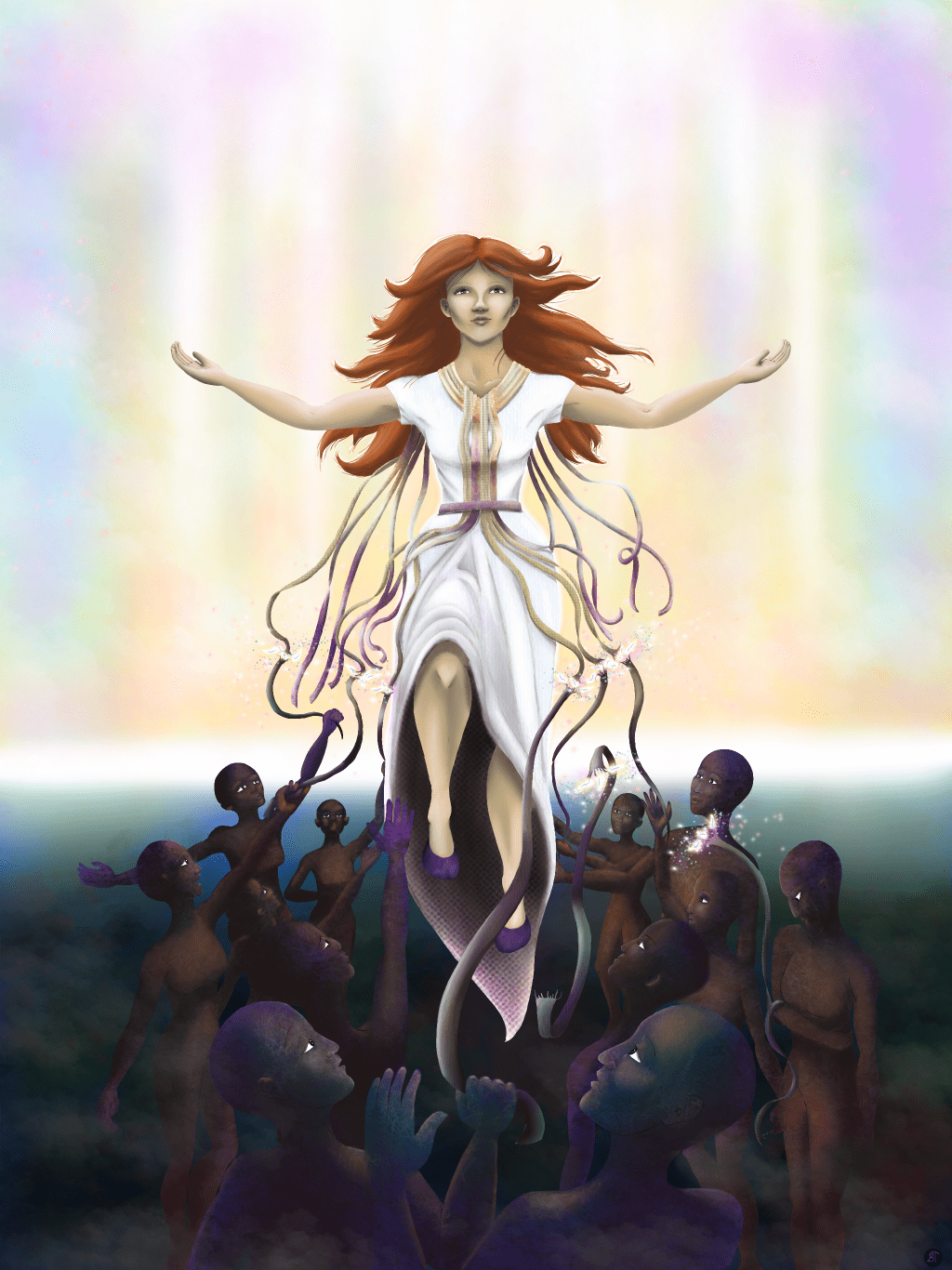
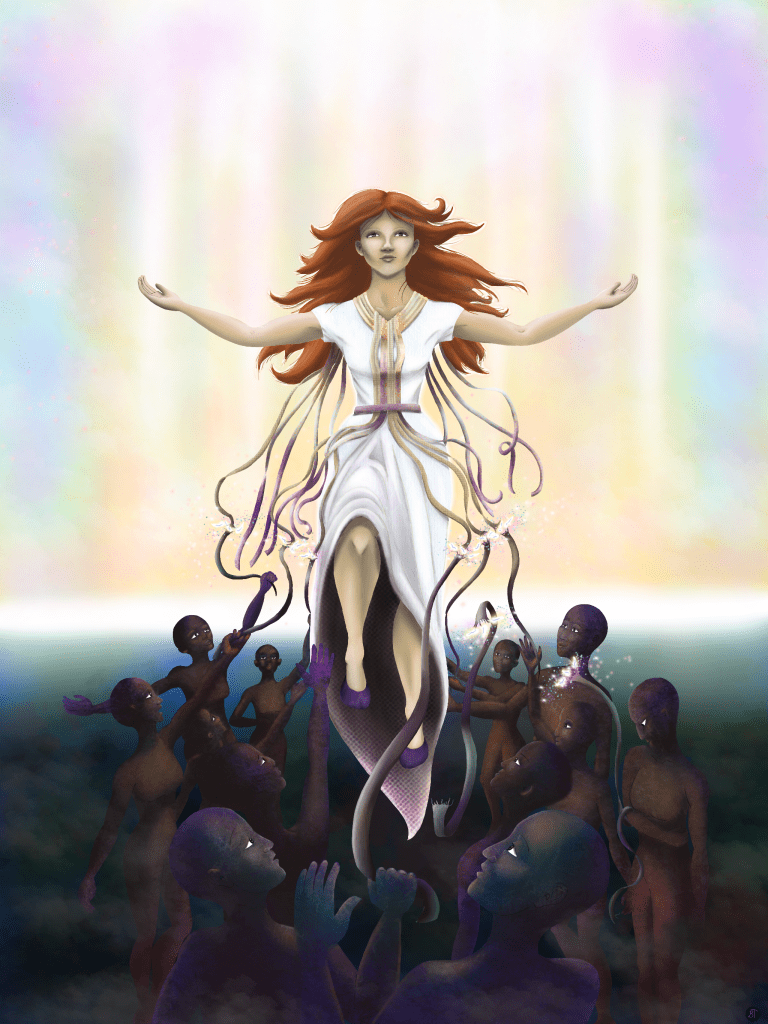
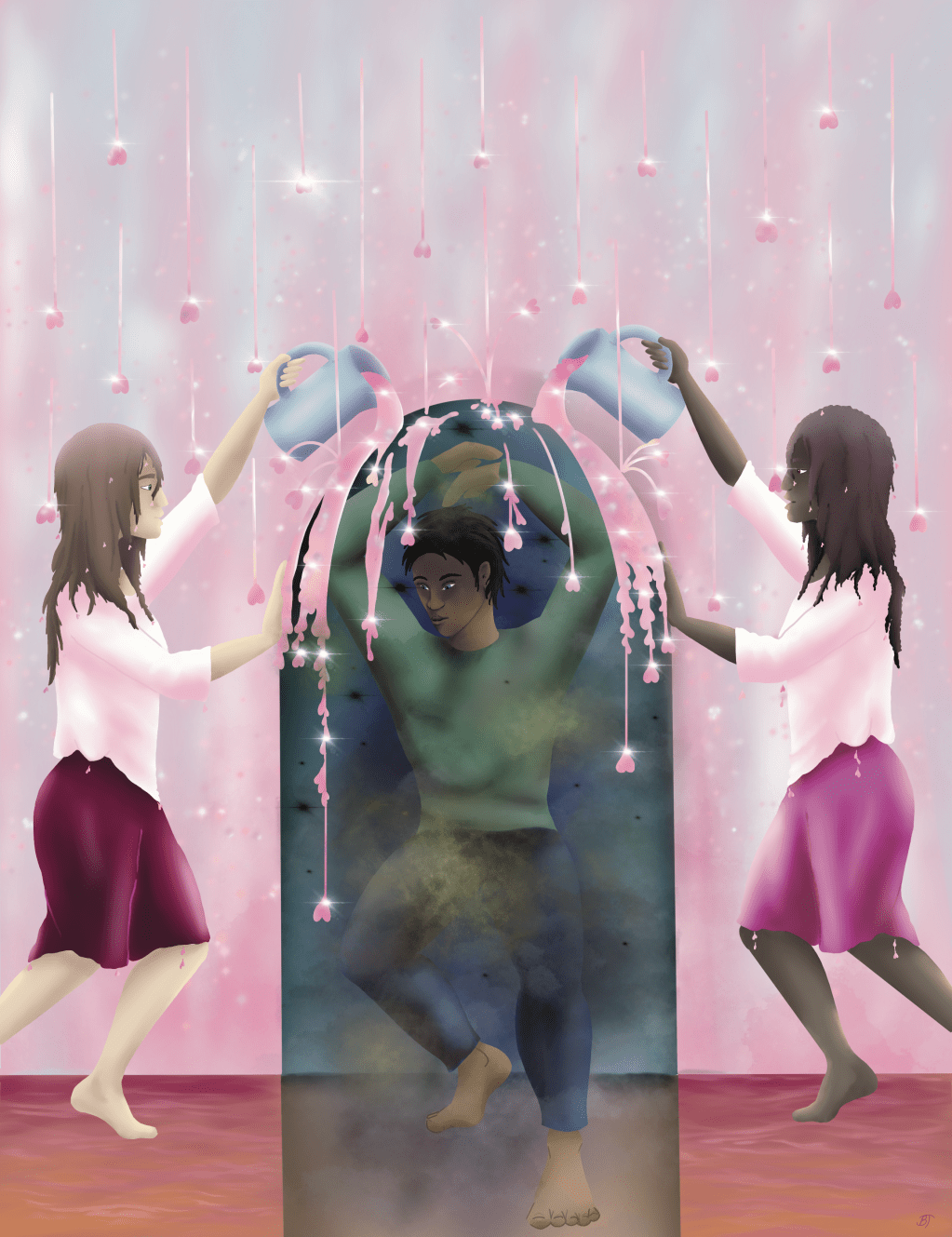
To honor myself and my family members who struggle with depression and anxiety and fears of any kind; to help anyone who feels held down by darkness, I created this piece of art (titled: Overcome) and a five-movement piano piece, also titled: Overcome. The five piano movements are: 1) Despair, 2) Wrestle, 3) Hope, 4) Rise, 5) Overcome.
DESPAIR
This first movement focuses on the pangs of despair that pull us down into lies and beliefs about ourselves that aren’t true. The constant down turn of the song no matter how high it starts represents the trains of thought (negative ones) that we cling to in anger, sorrow, and apathy. They weigh us down and guide us slowly and carefully down to darkness.
I worked several different chords while trying to find the sound for this song. I tried a couple key signatures. None of them sounded right. So, I just threw key signatures out the window and played with the sounds I was hitting until I found an interesting sound. I noticed that it started on A and yet it had a G#. It was hard to transition out of it into anything other than A Natural but I didn’t want to write any of the song in A Natural. It was too happy sounding.
I realized I had landed on a key signature that wasn’t commonly known (at least by those of us less schooled in music theory). So, I did what everyone does. I Googled it. A Harmonic Minor! What a glorious key to play. I loved it, embraced it, and was off. This is also my first go at writing in a minor key for an entire song rather than just a couple measures.
WRESTLE
This second movement is meant to show the struggle between negative thoughts (lies) and positive thoughts (truths). Both have an energy, but one pulls us slowly down while the other leads us toward hope. The accents in the energetic portions I want to feel like “tugs”. Negative thoughts tug. Positive thoughts tug. In the end, the more positive truths win out, but the final note leaves the song with a hint of uncertainty. That uncertainty is whether or not we can hold onto the truth and the positivity, the hope. As hearing those truths is much easier than believing them and remaining “above water”.
My daughter told me this song sounded like a creepy lullaby. I resonate with that idea quite a bit as it is often after going to bed that my head is spinning and warring between positive and negative ideas and thoughts. It is so much easier to sink into despair than it is to cling to those positive thoughts. This song is a fight between A Harmonic Minor and the key of A Natural. I discovered A Harmonic Minor when writing DESPAIR and I wanted this song to start with that same key since it is the second movement.
HOPE | RISE
Hope is a quiet thing. We crave it and fear it at the same time. It is slow to sink in. Fear and uncertainty like to hold hope ransom until there is proof. But most of the time leaps of faith are required to hold onto hope. As WRESTLE ends up clinging onto that hope by the end and ends with only one note of uncertainty from A Harmonic Minor, I begin HOPE with A Natural as proof that the wrestle was ultimately won.
Hope rises quietly and slowly in A Natural until a key change into the more positive sounding F Major of RISE. RISE goes through some interesting accidentals and key changes representing how rising out of depression, anxiety, and despair requires shedding different levels of faith and hope in the climb upward. The hope and faith we start out with is weak compared to the hope and faith we feel when we have “overcome”. The final key change is into D Major in preparation for the final movement, OVERCOME.
OVERCOME
This song is in D Major and it transitions to C Major. I actually wrote it in C Major first, because I forgot that I wanted it to start in the same D Major that I ended RISE with. So, I notated it in C and then transposed it up and added a key change to end in C Major because I felt a key change into C felt good for a triumphant ending.
For this song, I wrote some lyrics as an aid to developing the melody. I wanted the words to guide the feel of the melody. This is because I didn’t want it to feel like a hymn which can happen when you are going for a spiritual, chord-based “victory-sound”. I wanted the ultimate song to feel more like the unique melody of an individual person—like a personal theme song that someone might break into if life was a musical.
 bethanytolley.com
Leave a comment